
C250 Channel Drains — Commercial & Kerbside Drainage
C250 is the load classification under EN 1433 generally associated with commercial car parks, kerbside areas and appropriate medium-duty commercial environments. Forti Nova supplies the Domo C250 polymer concrete channel family.
Typical applications
- •Commercial car parks
- •Kerbside drainage
- •Medium commercial yard areas
Requires further assessment
- —Road drainage applications — D400 or higher required
- —Regular heavy vehicle routes without C250 product verification
Channel materials
C250 channels are typically constructed in polymer concrete for the strength and chemical resistance required in commercial environments.
Grate types
C250 channels use ductile iron grates — wide slotted or top-slot galvanised steel configurations depending on the specific product.
Installation considerations
C250 channels require a correctly specified concrete surround and must be installed to the manufacturer's requirements. Incorrect installation can reduce the effective load capacity.
C250 Products

ULMA Domo C250 Channel — Galvanised Offset Top Slot
1000mm × 100mm × 65mm depth

ULMA Domo C250 Channel — Polymer Concrete with Ductile Wide Slotted Grate

U100 C250 Channel — Polymer Concrete with Heel Guard Composite Grate
1000mm × 100mm
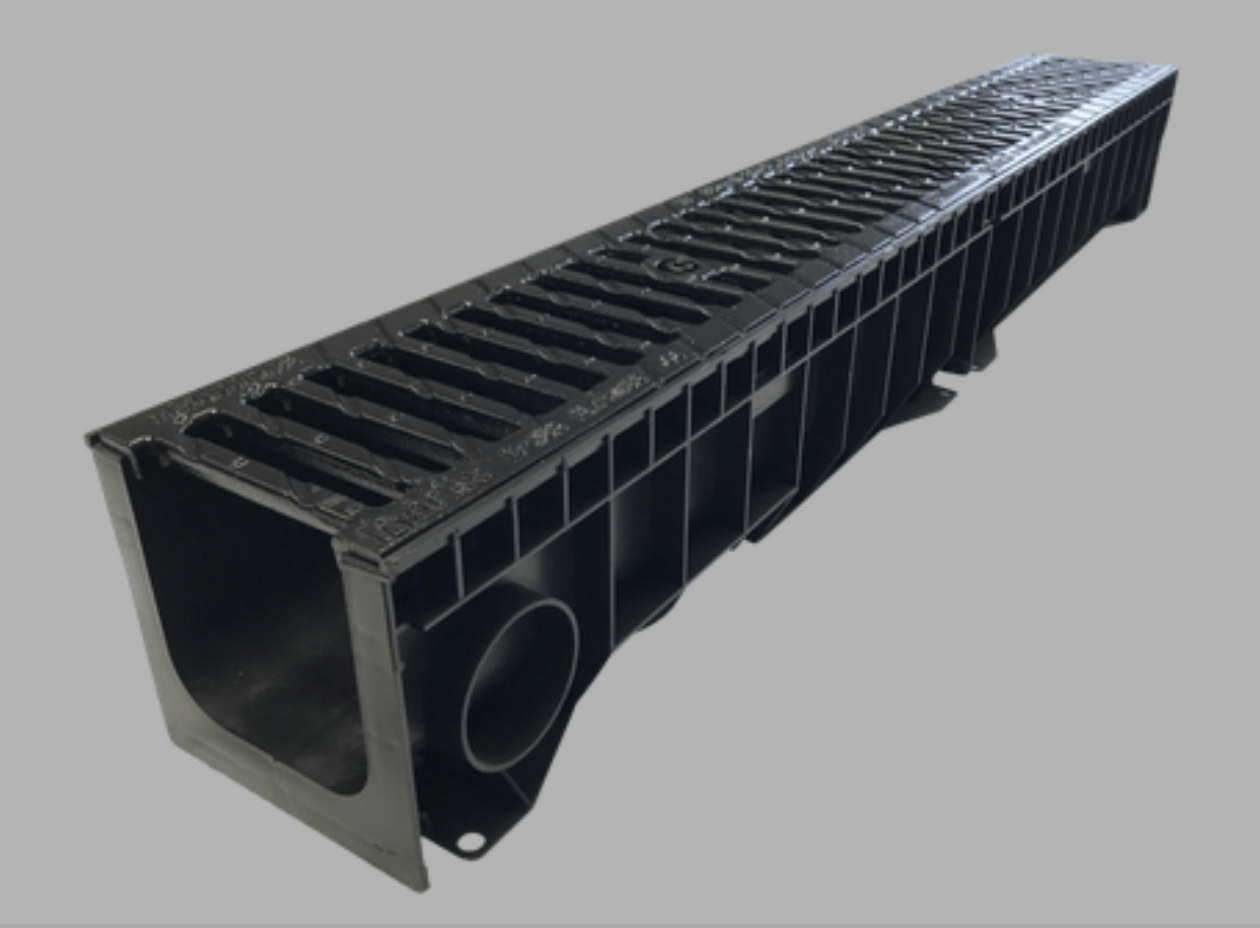
ULMA Hydro C250 Channel — Polypropylene with Bolted Ductile Grate
ULMA Hydro C250 Channel — Polypropylene with Galvanised Top Slot Grate
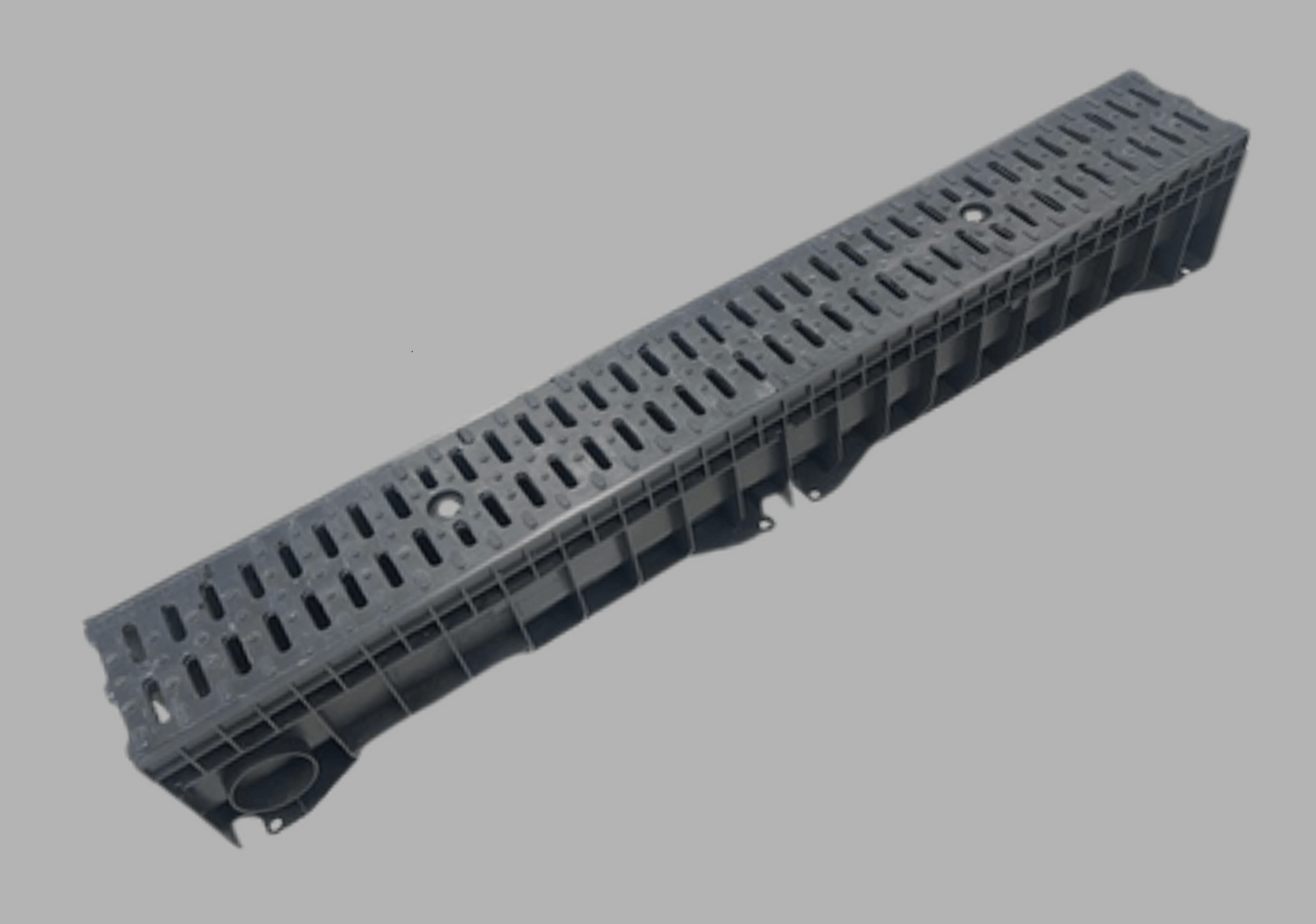
ULMA Hydro Plus C250 Channel — Bolted Ductile Iron Grating
Adjacent load classes
Frequently Asked Questions
Is C250 suitable for a car park with delivery vehicles?
C250 may be appropriate for car parks receiving light delivery vehicles. For sites with regular HGV delivery traffic, D400 should be considered. Confirm with our technical team and manufacturer documentation.
What is the difference between C250 and D400?
D400 is the higher load class, used for road and heavy vehicle applications. C250 is generally appropriate for commercial car parks and kerbside areas where the loading is lower. Always confirm against project-specific conditions.